
The holiday season is a time for togetherness, but hosting overnight guests can turn a serene home into a whirlwind of misplaced belongings and subtle chaos. As 2026 brings a renewed focus on intentional living and clutter-free spaces, professional organizers are urging hosts to rethink what remains on display. By removing a few key items before the doorbell rings, anyone can transform their home into a sanctuary that feels both welcoming and worry-free.
MaryJo Monroe, owner of reSPACEd, likens hosting to conducting an orchestra. "If every instrument is already on stage and perfectly tuned, the performance is seamless. But leave old, squeaky violins and a stray drum set in the way, and the music becomes noise," she says. This philosophy is especially true when it comes to fragile decor. Monroe advises stashing away precious vases, ceramic heirlooms, and delicate china. Not only does this prevent heartbreak over a shattered keepsake, but it also shields guests from the acute embarrassment of an accidental collision. It is a small act of grace, like removing tripwires from the path of unsuspecting dancers.
Lauren Saltman, founder of Living Simplified, adds that many hosts overlook the silent anxiety caused by belongings that are too precious to ruin. A hand-embroidered table runner or an antique glass centerpiece can act as a veiled threat, making guests tread on eggshells. By clearing these away, the emotional temperature of the room drops. Saltman suggests keeping only a few durable, machine-washable throws and pillows within reach. The goal is to create a space so forgiving that even a spilled glass of red wine becomes a laughable anecdote rather than a disaster.
:max_bytes(150000):strip_icc()/GettyImages-1158423906-1f5ce1c2d8ad4a1c9b3937c40d5c9c7f.jpg)
The kitchen, often called the heart of the home, requires aggressive editing. Nicole Sachiko, founder of Tidy Lifestyle, describes a crowded refrigerator as a clogged artery in the circulatory system of a holiday gathering. Expired condiments, half-used jars, and forgotten leftovers gum up the flow, leaving no room for the lifeblood of shared meals. Clearing the fridge of outdated food not only opens real estate for feast leftovers but also removes the faint, stale odors that can sour a festive morning. Sachiko further warns against the trap of countertop sprawl. Small appliances used once a year, like a panini press or an ice cream maker, should be exiled to cabinets. The empty counter becomes a calm bay where guests can dock with their coffee cups, rather than navigating an obstacle course of bills and old mail.
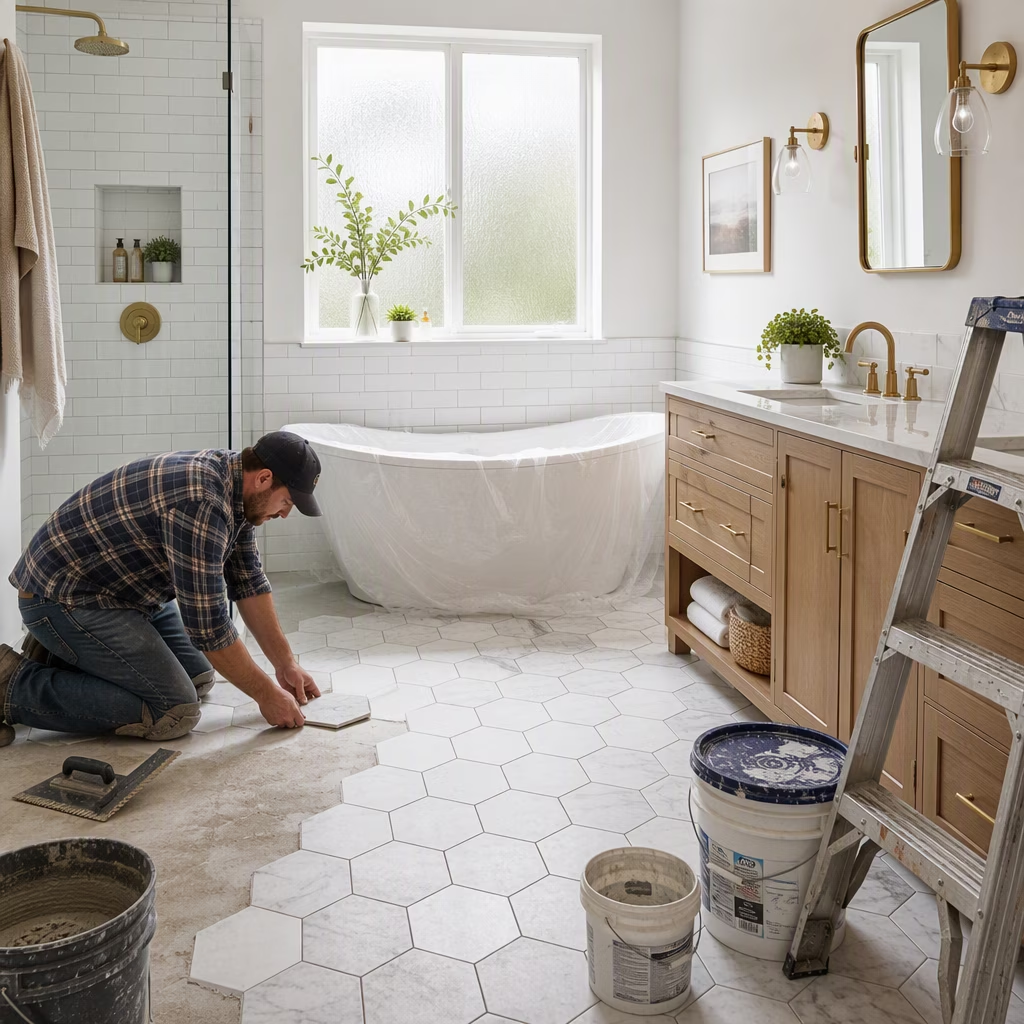
The bathroom, too, demands a spa-like reset. Monroe uses an unexpected metaphor: a communal bathroom should feel like a clear mountain stream, not a stagnant pond. She recommends discarding any half-used bars of soap and replacing them with fresh, wrapped ones. Expired toiletries and crusted shampoo bottles must be tossed, leaving shelves sparse enough for guests to place their own essentials. Sachiko suggests paring down to fresh towels, a neutral hand soap, and perhaps a simple candle or plant. This stripped-back environment not only signals keen hygiene but also offers a visual exhale, a quiet contrast to the joyful overload elsewhere in the house.
:max_bytes(150000):strip_icc()/GettyImages-1209818766-9e1a487f0b9c4c8f8fc4e6e0e6e7e7e7.jpg)
For households welcoming young children, safety must trump aesthetics. Monroe issues a stark reminder: the area beneath a kitchen sink is often a treasure chest of toxic cleaning supplies, glowing like forbidden candy to a toddler. Without cabinet locks, every bleach spray and detergent pod must be temporarily relocated to a high, unreachable shelf. This preemptive strike eliminates a lurking hazard that could turn a joyful holiday into a frantic emergency room dash. It is the simplest, most crucial item on any pre-guest checklist.
Hidden clutter, like the mail pile that metastasizes on entryway tables, must also be conquered. Saltman observes that paper clutter acts like quicksand for the mind; it traps attention and drags down the lightness of a visit. Important documents, bills, and any work-related papers concealing client information should be removed from guest bedrooms that double as home offices. Sachiko emphasizes that giving a guest a stark, anonymous surface to place a book or a glass of water is a profound gesture of hospitality. It transmits a silent message: "You have room here."
Ultimately, these seven removals—fragile decor, high-maintenance linens, expired fridge items, countertop gadgets, under-sink chemicals, bathroom clutter, and paper piles—do more than tidy a home. They dismantle the invisible scaffolding of stress that guests unknowingly sense. In 2026, the most profound luxury is not opulence but the gift of a cleared space, a place where everyone can simply be.