
As a professional gamer who spends hours immersed in virtual worlds, I've come to appreciate the real-life importance of comfort and safety in my own home. Recently, I embarked on a journey to help my aging parents modify their house so they could age in place gracefully. Little did I know, I'd stumble into a minefield of renovation blunders that could have cost us a fortune! Through trial and error, and chats with experts, I uncovered the top pitfalls to dodge. Let me spill the beans on how to make your home a safe haven without breaking the bank or sacrificing style. 😊
When I first started, I thought, "Why not go all out and gut the entire bathroom?" But boy, was I barking up the wrong tree! Ryan Holt, a certified aging-in-place specialist, set me straight. He explained that full room remodels are often overkill and unnecessary. Instead, minor tweaks like adding grab bars or swapping out toilets for more accessible models can do the trick. For instance, a curbless shower installation doesn't require tearing everything down—it's a smart, targeted fix. Rachel Blindauer, a principal interior designer, chimed in, saying, "The goal isn’t to install a hospital bathroom in your home—it’s to create a space that supports your future self without compromising your present joy." She warned against sterile, oversized grab bars and medical-grade flooring, urging us to aim for "invisible ease" with stylish upgrades like natural stone tiles or widened doorways. 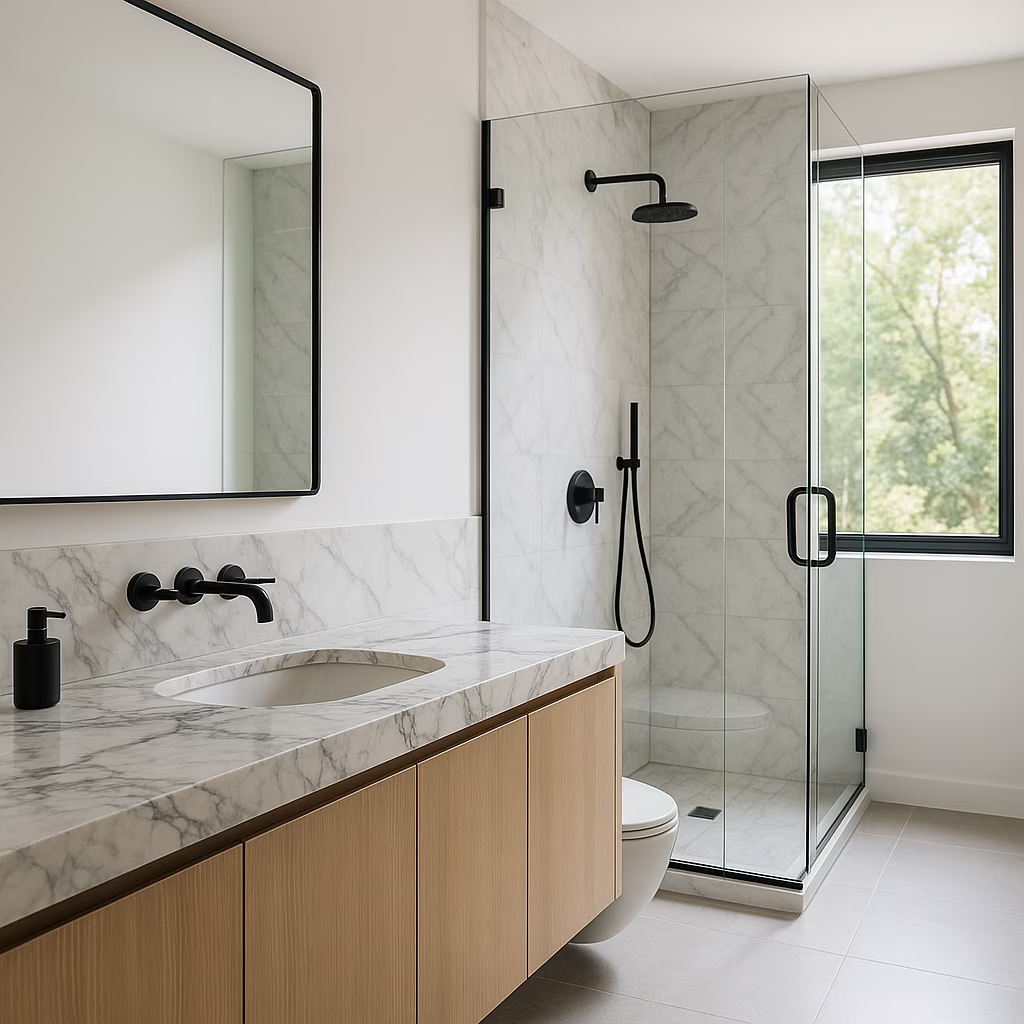 :max_bytes(150000):strip_icc():format(webp)/182414213-56a49f485f9b58b7d0d7e175.jpg)
Next up, I considered installing an elevator for my parents' two-story home. Talk about putting the cart before the horse! Holt pointed out that elevators are usually a waste of money unless someone is wheelchair-bound and needs constant assistance. In most cases, stair lifts are a more affordable and less invasive option. They're a real game-changer, costing a fraction and fitting seamlessly into daily life. But here's where I almost dropped the ball: when we opted for a walk-in tub, I forgot to think about the water heater. Holt shared a common horror story: "Installing a walk-in tub without upsizing the water heater is a recipe for disaster." These tubs hold more water, so a standard heater runs cold fast. The fix? A tankless water heater—it's efficient, lasts longer, and keeps the hot water flowing like a dream. By 2025, with smart home tech advancing, these upgrades are easier and more cost-effective than ever.
Flooring was another area where I learned the hard way. I replaced some carpets with slip-resistant materials, thinking it was a no-brainer. But Holt cautioned, "Even small transitions—from hardwood to carpet, tile to vinyl, or subtle height differences at thresholds—can easily become tripping hazards." Ensuring smooth, level surfaces is crucial. For example, in high-traffic areas, avoid rough transitions; opt for continuous flooring to prevent falls. :max_bytes(150000):strip_icc():format(webp)/GettyImages-2196362910-a3b9eccd8a0f40dabad79d1449aeb62f.jpg)
Now, let's tackle the elephant in the room: sometimes, renovating isn't worth it. Holt put it bluntly: "Sometimes the most practical and cost-effective solution to age-in-place isn’t renovating but downsizing or relocating to a home designed with single-floor living in mind." If your home needs drastic changes, like adding a main-floor bedroom and bathroom, it might be smarter to move. In 2025, housing trends show a surge in accessible-ready homes, making this option more viable. Don't throw good money after bad—weigh the costs and benefits first.
People Also Ask: What are the best budget-friendly aging-in-place renovations?
Based on my experience and expert advice, here's a quick rundown:
-
Install grab bars in bathrooms: Cheap, easy, and life-saving—no need for a full remodel. 😊
-
Upgrade to slip-resistant flooring: Use materials like vinyl or rubber in key areas.
-
Adjust kitchen counter heights: A small change that makes a big difference for mobility.
-
Add smart home devices: By 2025, voice-activated lights or sensors are affordable and enhance safety.
To wrap it all up, let's summarize the key mistakes and fixes in a handy table:
| Common Mistake | Why It's a Problem | Smart Solution |
|---|---|---|
| Full room remodels | Costly and unnecessary | Minor modifications like grab bars |
| Installing elevators | Expensive and invasive | Opt for stair lifts instead |
| Ignoring water heater upgrades | Causes cold water in walk-in tubs | Switch to a tankless water heater |
| Rough flooring transitions | Creates trip hazards | Ensure smooth, level surfaces |
| Forcing renovations on unsuitable homes | Wastes money and time | Consider downsizing or moving |
This journey taught me that aging-in-place renovations are all about working smarter, not harder. Hit the nail on the head by focusing on practical, stylish upgrades that keep your home feeling like home. So, what are you waiting for? Don't let another year slip by—book a consultation with a certified aging-in-place specialist today to start your safe and savvy home transformation! 🚀