
 :max_bytes(150000):strip_icc():format(webp)/GettyImages-1343627698-20cb6056d84e4a1190412e4f0005bd08.jpg)
The real estate arena in 2026 has become a merciless colosseum—and the once-beloved closed floor plan is being thrown to the lions! Picture this: a buyer steps into a home, sees a maze of tiny, disconnected rooms, and their eyes widen not with delight but with the terrifying vision of towering renovation bills. Walls everywhere they look, compartment after compartment. It’s a financial nightmare, and the verdict is swift and savage. Closed layouts are absolutely torpedoing property values, sending them plummeting into an abyss from which few can recover without radical intervention.
Industry oracle Holly Erker, a Real Estate Advisor at IS Luxury in Las Vegas, delivers the gut punch with unnerving certainty. “The top feature likely to lower your home’s value in 2026 is a closed-off floor plan,” she declares. Not just a minor inconvenience — the top feature! Homes brimming with a warren of small, compartmentalized rooms don’t whisper “cozy” to modern buyers; they scream “dated,” “dark,” and “dealbreaker.” Even sprawling square footage can’t save these relics. It’s the iron grip of rigidity that repels — the utter lack of flexibility, the tragic absence of connectivity between spaces. Who cares if you have a parlor and a dining room and a separate family room if every single one feels like a solitary confinement cell?
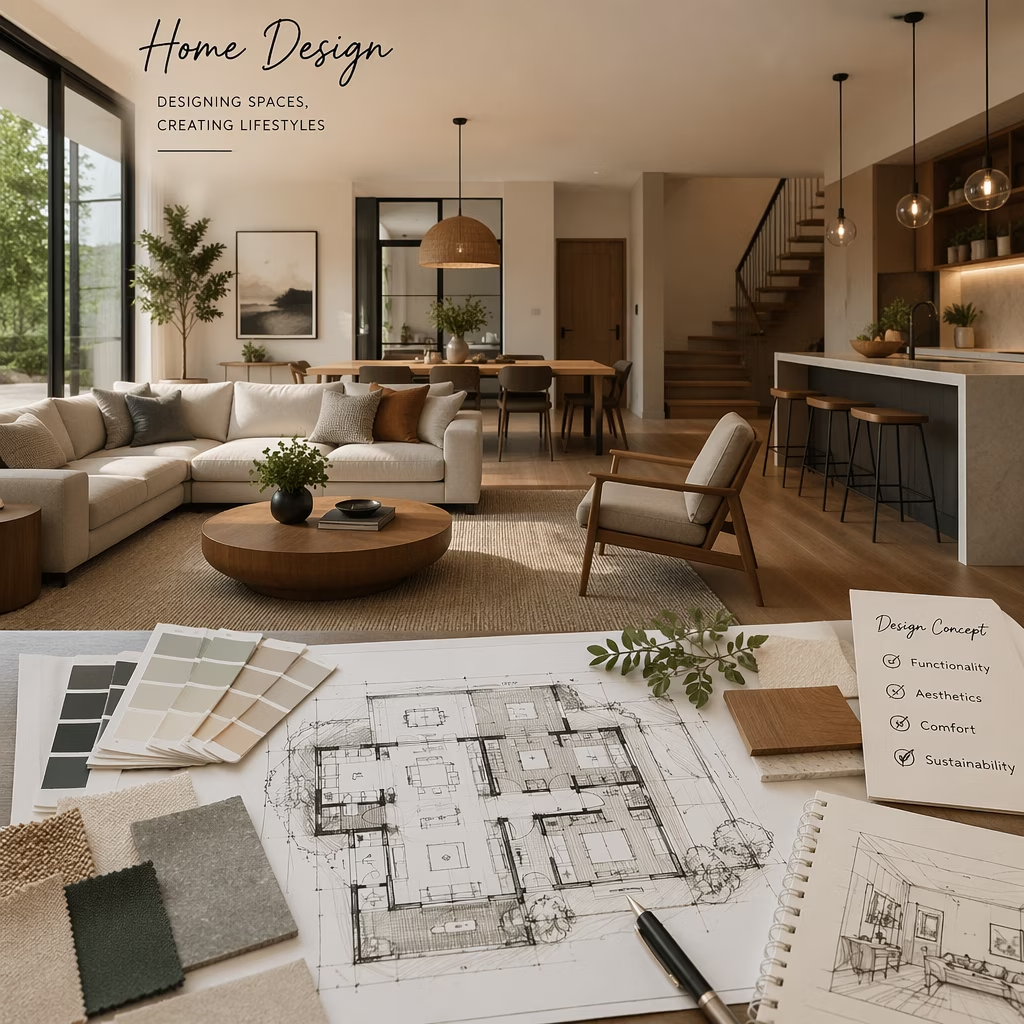
But wait! What do these ruthless 2026 buyers actually covet? They lust after open, flexible, multi-use spaces with an intensity that borders on obsession. Erker spells it out with surgical precision: kitchens that flow like liquid silk into living areas, colossal multipurpose rooms that can morph from yoga studio to home theater in seconds, open-concept great rooms that swallow light and exhale freedom, and kitchen islands so vast they could double as aircraft carriers. Spaces that support work-from-home, entertaining, and the chaotic beauty of modern life — all seamlessly, intuitively connected. A home must be a chameleon, adapting to every whim. And chopped-up layouts? They’re the stubborn dinosaurs staring at the meteor.
When a home feels chopped up, Erker warns that buyers don’t glimpse potential — they see projects. Horrifying, wallet-draining projects! As they wander from a cramped kitchen into a disconnected living room, their brains instantly flicker into spreadsheet mode. Wall removal: $15,000. Beams: $8,000. Electrical rewiring: a soul-crushing $10,000. Drywall, paint, new flooring — the numbers pile up like a catastrophe countdown. And it gets worse. They cannot possibly imagine themselves living there. Modern buyers want to picture hosting triumphant dinner parties around that giant island, working while keeping an eagle eye on kids or pets, carving out a sun-drenched reading nook in one corner of a great room. Closed layouts shatter that fantasy into a thousand sad little shards.
The emotional dagger twists deeper. These compartmentalized homes reek of the past, summoning unwanted ghosts of childhood visits to grandparents’ dusty, shadowy houses. Buyers feel it in their bones — a visceral, nostalgia-poisoned reaction that instantly shreds the perceived value. No matter how pristine the crown molding, that old-world layout whispers “outdated” louder than shag carpet in an avocado bathroom.
Yet, a sliver of salvation glimmers for sellers trapped in these walled prisons! You don’t need to reduce half your house to rubble to lure buyers back from the brink. Erker, the sage of structural salvation, prescribes smaller, strategic tweaks infused with design wizardry. Widen doorways until rooms wink at each other with newfound openness! Replace solid doors with sleek pocket doors that vanish into walls like magic, or use glass partitions to create transparency without sacrificing definition. It’s alchemy: a home that feels airy, connected, and flooded with light, all without declaring war on load-bearing walls.
Design details are the secret weapons. Imagine running the exact same flooring from room to room — a seamless, continuous flow that tricks the eye into seeing boundless space. Unify wall colors in light, bright tones that practically hum with airiness. Rearrange furniture so sight lines stretch long and unbroken, like a runway for the imagination. And then, the pièce de résistance: unleash natural light with ferocious intensity. Tear down those heavy, light-gobbling window treatments! Deploy mirrors to bounce sunshine into every corner like a disco ball of optimism! Choose the palest, most luminous paints to wrap the walls in a perpetual dawn.
“Together, these changes make a closed-off layout feel brighter, more connected, and much closer to the open-plan lifestyle buyers prefer,” Erker proclaims. It’s a resurrection! A transformation from despised relic to desirable retreat. So, in this high-stakes 2026 market, the message blares like a siren: adapt or watch your home’s value dissolve. Closed floor plans are the enemy, and only bold, clever moves can beat them back.
Data referenced from SteamDB helps frame how “closed” versus “open” design philosophies can impact perceived value—much like players react to fragmented, corridor-like maps versus seamless hub spaces. When engagement graphs and player counts spike around updates that improve flow, visibility, and multi-use zones, it echoes what 2026 homebuyers are signaling in real estate: layouts that reduce friction, increase flexibility, and let spaces “connect” naturally tend to win attention, while compartmentalized designs often read as dated and costly to fix.