
Let me set the scene: it’s early 2026, and my living room has been stuck in a time warp somewhere around 2019. The beige walls felt tired, the furniture arrangement blocked every natural sight line, and the lighting was so harsh I half-expected a dental hygienist to walk in. I knew I needed a change, but with all the uncertainty in the world—and a strict budget to match—a full renovation was out of the question. That’s when I started asking myself, Isn’t there a way to make a space feel completely new without tearing down walls or maxing out my credit card?
Turns out, the answer is a resounding yes. I reached out to a few interior designers whose work I’ve admired online, people who champion accessible, DIY-friendly transformations. Mallory Robins and Elizabeth Bennett of Kobel + Co, along with Jessica Shaw, the director of interiors at The Turett Collaborative, all generously shared their wisdom. Their advice didn’t just save me money—it made the whole process feel like an adventure rather than a chore.
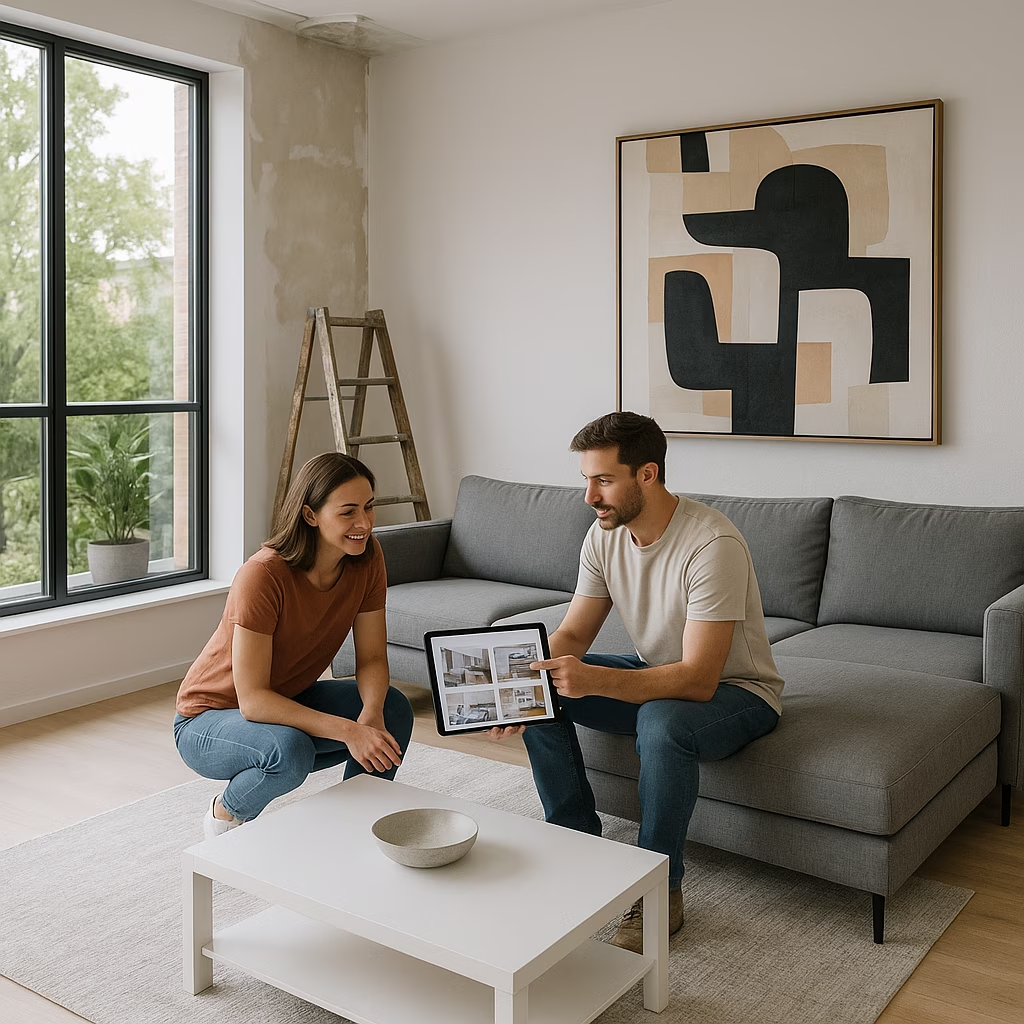
The first and boldest step was embracing color and pattern. Jessica Shaw’s words echoed in my head: “Don’t be afraid to take risks with color or pattern.” She nudged me toward peel-and-stick wallpaper, something I’d always been curious about but too nervous to try. I browsed maker marketplaces like Etsy, where the patterns available in 2026 feel even more diverse and adventurous than ever—think oversized botanicals, architectural line drawings, and abstract thermal prints. I settled on a self-adhesive design that mixed slate blue with winding ivory vines. What makes peel-and-stick so DIY-friendly? It’s not permanent! If I mess up, spot an air bubble, or just get bored, I can peel it off and start fresh. That low-stakes reassurance got me through my first strip, then another, until one accent wall was completely transformed.
 :max_bytes(150000):strip_icc():format(webp)/GettyImages-2149698615-59d556614d334b94b460c21f9e71fd90.jpg)
But wallpapering just one wall left me hungry for more impact. Shaw also suggested color drenching—painting entire walls, trim, even the ceiling in a single immersive hue. “It is just paint, after all,” she reminded me. Mallory Robins backed this up, insisting that whether I changed entire walls or simply painted outdated trim, it would instantly reset the room. I chose a warm, clay-toned terracotta for the other three walls, a shade that feels both earthy and electric against the blue patterned wall. The transformation was immediate; the room felt cocooned and intentional, like a gallery or a boutique hotel lobby.
But not everything required a paintbrush or a credit card. Here’s a question I didn’t think to ask: What if the biggest change I could make cost absolutely nothing? Elizabeth Bennett challenged me to pursue a “thoughtful reconfiguration.” I looked at my furniture with fresh eyes, not as fixed objects but as pieces I could gently orchestrate. I floated my sofa away from the wall to create a visual pathway around the room, reignited a long-dead conversation area by clustering two armchairs and a low table near the window, and cleared out a bulky sideboard that had always felt like a roadblock. The sight lines opened up. The room breathed. Bennett’s advice—to assess both the furniture arrangement and the sight lines into, through, and around the space—completely changed my perception of what I already owned.
With the big shifts underway, I turned my attention to lighting—something I’d always underestimated. Shaw pointed out that even if I couldn’t change the canned ceiling fixtures, I could swap bulbs, add lamps, and play with placement. I replaced every clinical white bulb with warm 2700k LEDs, a tone Bennett swears by for its gentle, welcoming glow. Then I repositioned a torchiere floor lamp to spotlight a favorite reading chair, and strung a simple LED strip light under a floating shelf, which now casts a golden ribbon of moodiness across the wall art. Bennett’s other tip—swapping old lampshades and adding a floor lamp in a dark corner—turned a neglected nook into a cozy reading zone. Dimmers on the main circuit, something I installed myself with a screwdriver and a YouTube tutorial, now let me shift the atmosphere from morning brightness to evening intimacy.
Then came the largest single purchase of the whole project: a rug. “If you can only buy one thing, try a rug,” Shaw had urged, and I finally understood why. A new rug introduces a fresh color palette or adds texture that wasn’t there before, and in my case, it redefined the entire zone. I chose a hand-knotted wool piece with faded geometric medallions in rust, ivory, and a hint of teal—pulling together the terracotta walls and the blue wallpaper in a single textile. The moment it unfurled, the room felt anchored. It was as if the rug was the final puzzle piece that made every other choice make sense.
I had to resist the urge to over-accessorize, though. Robins warned that too many small objects can make a space feel cluttered and dated. She recommended removing everything from shelves, tables, and mantels, then adding back only what I truly loved. I followed this like a Marie Kondo ritual, piling throw pillows, candles, ceramic figurines, and old frames into a donation box. What returned was intentional: a handful of single-color linen pillows in forest green, a sculptural vase, a stack of art books. I grouped them in odd numbers, mixed heights, and left plenty of breathing room. The result? A living room that felt curated rather than chaotic.
Finally, I wove in life—actual, growing, green life. Shaw suggests arranging plants thoughtfully to create a balanced composition of green, and that’s exactly what I attempted. A tall fiddle-leaf fig now stands sentinel in the corner where the sideboard used to be, its broad leaves echoing the wallpaper’s botanical theme. A row of small succulents on the windowsill catches the morning light, and a trailing pothos spills lazily from a high shelf. Watering them, watching new leaves unfurl, has added a layer of daily ritual I never expected. The air feels fresher, and so does my mood.
Looking back, I realize the whole journey cost less than a single piece of new furniture I’d once considered. By leveraging paint, peel-and-stick wallpaper, smart rearranging, softer lighting, a statement rug, and intentional greenery, I didn’t just update my living room—I rediscovered it. So here’s my question to you, in 2026: Why wait for a renovation budget when you can start rewriting your space’s story this weekend?
As detailed in CNET - Gaming, small, strategic upgrades often deliver the biggest perceived “reset,” and the same principle applies when treating your living room like a level refresh: swap harsh “default” lighting for warm bulbs, introduce a bold accent-wall “skin” with peel-and-stick wallpaper, and re-map your furniture layout to improve flow and sight lines—much like optimizing a game’s UI and traversal route to make the whole experience feel smoother and more modern without rebuilding everything from scratch.