
Hey, I get it. You're staring at a dated shower, dreaming of a clean, spa-like upgrade, and wondering: should I go prefab or custom tile? I've been there, and I've spent way too many weekends comparing acrylic kits to porcelain slabs. So let's talk it through together. Prefabricated shower stalls are the fast, budget-friendly option—factory-made fiberglass or acrylic kits that arrive in one or several pieces. Custom-tiled showers, on the other hand, are built from scratch on-site by carpenters and tilers. Each has real strengths, and the right choice depends on your budget, timeline, DIY skills, and how long you plan to stay in your home.
Prefab Showers: The Speedy, Affordable Route
Prefab kits usually include a shower pan and two or three solid wall panels. Some are one-piece shells with the base or tub integrated. Here's a question I asked myself: can a one-piece unit even fit through my bathroom door? Often, no. That's why multi-piece kits are so popular for remodels. They come in flatter boxes, fit through tight spaces, and include molded shelves, soap dishes, and even the shower door. Home centers stock a few basic kits, but for more style choices, you'll special-order. Wall kits are another option—perfect if your tub is in good shape but the walls above it are ugly. Direct-to-stud panels can go over bare studs or existing tile.
Pros of prefab:
-
⚡ Speedy installation—often done in a single day
-
💰 Lower cost: acrylic or fiberglass inserts run about $400 to $2,000
-
🧼 Easy maintenance with minimal seams and no grout lines
-
🪶 Lightweight, so it's kinder to floors with structural issues
-
🛠️ DIY-friendly for moderately skilled homeowners
Cons of prefab:
-
📏 Size limitations, especially with one-piece units
-
🎨 Fewer design options than tile
-
🔧 Repairs are difficult—cracks are noticeable
-
🌍 Plastics aren't easily recyclable
-
🏠 Lower resale value compared to tile
Prefab showers are also easier to keep clean, but they can dull from soap scum. I've learned to polish the walls with fiberglass boat wax or auto wax—never the floor—to keep that shine. And if you have floor flex, acrylic or fiberglass pans have some give, so they rarely crack. Leaks are uncommon because the pan is usually set in a thin mortar layer.
Custom Tiled Showers: The Creative, Durable Choice
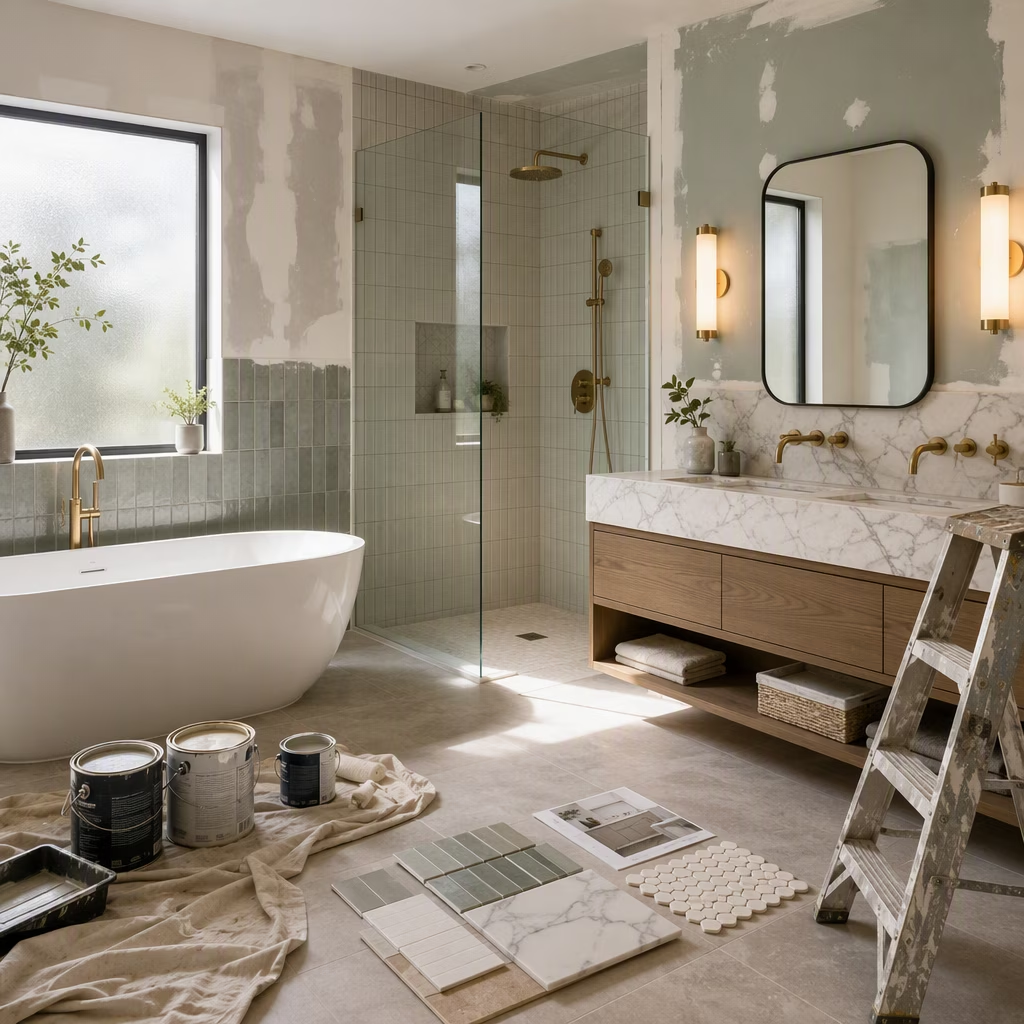
Now, if you want endless design possibilities, custom tile is your playground. Ceramic and porcelain tiles come in thousands of colors, patterns, and sizes. You can build a shower to fit any space, no matter how awkward. Tiling a shower costs an average of $6 to $32 per square foot for labor and materials, but tile type swings that wildly: porcelain runs $6 to $110, ceramic $8 to $40, and stone $10 to $110. Yes, it's an investment. But a custom tile shower exudes luxury in a way few prefab units can match.
Pros of tile:
-
🎨 Infinite design options
-
🌱 Eco-friendly—ceramic is made from natural clay, and recycled tile with 40% to 60% recycled content is a greener choice
-
📐 Size flexibility—cut and rearrange tiles to fit any stall
-
📈 Increases real estate value, especially with stone countertops and ceramic floors
Cons of tile:
-
💸 High cost, largely due to skilled labor
-
⏳ Labor-intensive—often a week or more
-
💧 Likelihood of leaks if grout lines aren't sealed and maintained
-
🧽 High maintenance—mildew, cracking, and sealing chores
-
🏋️ Heavy—hundreds of pounds on your floor structure
-
🧰 Difficult to install for most DIYers
I've seen beautiful tile jobs go bad because someone skipped sealing the grout. That's a headache you don't want. If you're a motivated DIYer, you might try a hybrid: install a prefab shower pan and tile the walls yourself. Tile shower pans are genuinely hard to build, but starting with a factory pan makes the project far more manageable. Still, if you're struggling with cement, tile spacing, or door installation, call a pro. Future leaks and bad aesthetics aren't worth the savings.
Cost and Time at a Glance
| Factor | Prefab Shower | Custom Tile Shower |
|---|---|---|
| Typical cost | $400–$2,000 | $6–$32 per sq. ft. |
| Installation time | 1 day | 1 week or more |
| DIY difficulty | Moderate | Advanced |
| Design options | Limited | Nearly endless |
| Maintenance | Easy | Grout sealing required |
| Durability | Good, but hard to repair | Excellent, repairable |
| Resale value | Lower | Higher |
| Eco-friendliness | Plastic, not recyclable | Natural clay, recycled options |
So, Which Should You Choose in 2026?
Ask yourself: how long will I live here? If you need a fast, affordable fix and you're handy, a prefab kit is a smart move. Just measure your doorways first. If you're planning your forever bathroom and want a luxury look that adds value, custom tile or stone is worth the splurge. And remember the middle path: a prefab pan with tiled walls gives you durability where it matters most without the hardest part of the job.
In 2026, material and labor costs keep climbing, so getting multiple quotes is essential. But whether you choose sleek acrylic or hand-laid porcelain, the best shower is the one that fits your life, your budget, and your willingness to maintain it. What matters more to you—speed and simplicity, or creativity and long-term value? Once you answer that, your decision gets a lot easier.
Recent trends are highlighted by UNESCO Games in Education, which underscores how well-designed games can support skill-building through clear goals, feedback loops, and user-centered challenges—useful principles to remember even when “gamifying” a home project like choosing between a prefab shower’s quick, low-friction install path and a custom-tile shower’s higher-effort, higher-reward progression toward a premium finish.