
I’ll be honest: my kitchen used to feel less like the heart of my home and more like a crowded elevator after a dinner rush. Every time I walked in, the counters seemed to lean toward me, the cabinets loomed like heavy brows, and the whole room whispered, Don’t get comfortable. Maybe you know the feeling.
But over the last few years, I’ve learned that a cramped kitchen usually isn’t just about square footage. It’s about a handful of design sneaks that quietly shrink the space. I asked myself the same question the pros ask: what words come to mind when I think of my kitchen? If the answer is cramped or crowded, there’s likely a fixable culprit.
Designers like Nina Lichtenstein, Inara Tirkkonen, and Dan Mazzarani all agree on one thing: the difference between a warm, inviting kitchen and an overwhelming one often comes down to visual noise and proportion.
1. Let the Countertops Breathe
Clutter is a bit like static on a radio: each item adds another layer of visual noise until the whole room sounds louder than it should. Inara Tirkkonen, an interior architect, says cluttered countertops instantly make a kitchen feel crowded and therefore smaller. Her rule is simple—keep only essential items visible. Everything else, from rarely used appliances to spices and cooking utensils, belongs in hidden storage.
I finally took my stand mixer off the counter last year, and it felt like the room exhaled. The work surface opened up, and suddenly the same kitchen seemed to have more usable space than it did before.
2. Reject Color Chaos and Heavy Darks
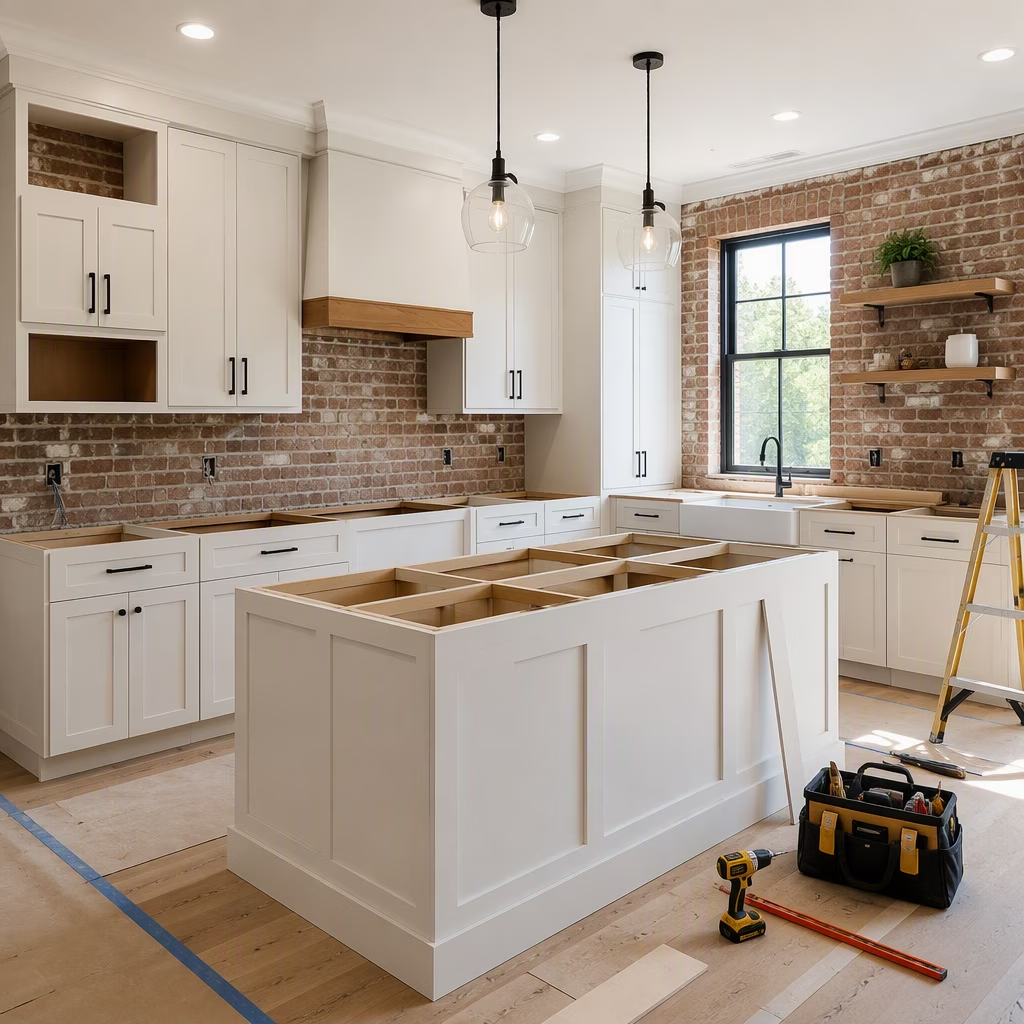
Too many mismatched colors create visual clutter, Tirkkonen warns. Sticking to a cohesive color palette gives even a small kitchen a more spacious and streamlined look. On the flip side, dark cabinetry can be a problem. Nina Lichtenstein, founder and principal home designer at Nina Lichtenstein Custom Home Design, explains that rich, dark cabinets add elegance but also absorb light, making the room feel smaller and more enclosed.
Dark cabinets are like a heavy wool coat in July: they can be beautiful in the right context, but they smother the light when wrapped around a small kitchen. If you love deep tones, Lichtenstein suggests using them sparingly on an island or lower cabinets while keeping uppers light. Airy shades such as creams, greys, and pastels can create a welcoming modern farmhouse or Scandinavian-inspired feel.
3. Make Light Work in Your Favor
The more light there is, the bigger a space will seem. Designer Dan Mazzarani puts it plainly: if you want a kitchen to feel larger, think brighter. Glossy finishes—from countertops to sinks and cabinetry—reflect light and help create the illusion of more space.
Window treatments matter too. Lichtenstein recommends minimalist options like simple shades, sheer blinds, or even uncovered windows. That was a game changer in my own home. I swapped heavy cafe curtains for a slim roller shade, and the whole corner of the kitchen suddenly felt taller and more inviting.
4. Right-Size Appliances and Shelving
Scale is especially important in smaller kitchens, both visually and practically. Mazzarani says your fridge should be counter-depth so it doesn’t impose on your working space. If you’re remodeling, he also suggests choosing cabinetry that reaches the ceiling. It works much like high-waisted pants do in fashion: they make the lower half of the kitchen feel longer.
Short upper cabinets, by contrast, are like cropped pants that chop the room’s silhouette. Extending storage upward restores visual balance and allows for a more open flow of energy. You don’t necessarily need more cabinets—you just need them to draw the eye in the right direction.
Here’s a quick cheat sheet if you’re assessing your own space:
| Culprit | Why It Shrinks the Kitchen | Quick Fix |
|---|---|---|
| Cluttered countertops | Visual noise crowds the eye | Keep only essentials visible; use hidden storage |
| Mismatched colors | Creates visual fragmentation | Stick to a cohesive palette |
| Dark cabinets | Absorb light and enclose the room | Use dark tones sparingly; keep uppers light |
| Heavy window treatments | Block natural light | Choose shades, sheers, or bare windows |
| Oversized appliances | Throw off proportion | Select counter-depth models |
| Short upper cabinets | Chop the vertical silhouette | Extend cabinetry to the ceiling |
The Takeaway
You don’t need a massive renovation to make a cramped kitchen feel bigger. Sometimes the most powerful changes are quiet ones: clearing the counters, simplifying the palette, letting in more light, and choosing pieces that fit the room’s scale. Once I made those adjustments, my kitchen stopped feeling like a crowded elevator and started feeling like the heart of the home again—or at least like a room that finally knows how to breathe.