
As the calendar flips to 2026, the world of interior design is undergoing a radical transformation. Forget those pristine, all-white kitchens that once graced every home magazine cover—designers are now declaring them passé. The once-coveted neutral minimalism that dominated living spaces is being swept away by a wave of warmth, texture, and personality. It seems the collective desire for homes that feel like sanctuaries, not sterile showrooms, has finally reached a tipping point. The experts are clear: the era of flat, emotionless interiors is over, and 2026 is all about crafting spaces that tell a story and hug you back.
 :max_bytes(150000):strip_icc():format(webp)/GettyImages-1317785246-97b94324529c4a3ebc233b208c413604.jpg)
The Great White Kitchen Exodus 🚫
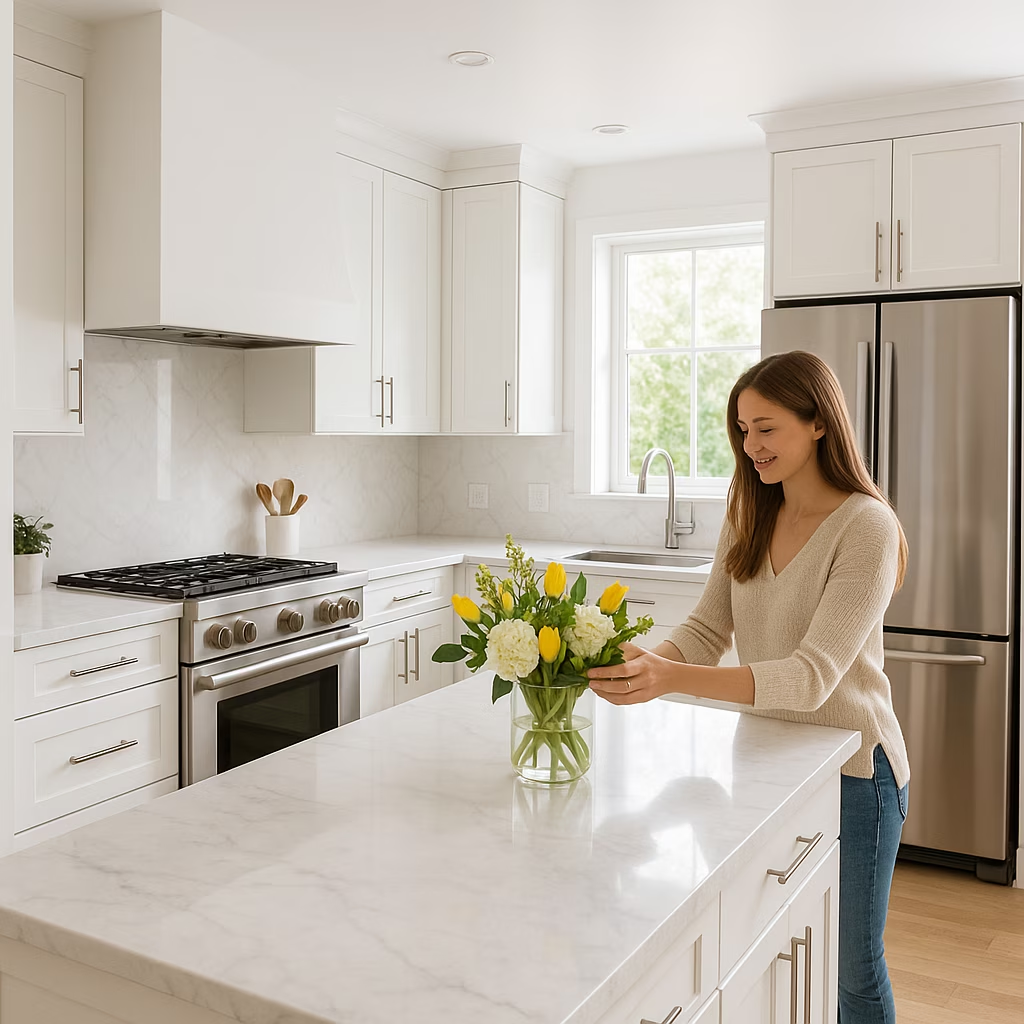
For years, the all-white kitchen reigned supreme, touted as the epitome of classic, safe design. But according to interior designer Lexie Saine, that reign has ended. "It often falls flat, especially in homes with real character or architectural history," she quips, suggesting that these kitchens can end up feeling as inviting as a laboratory. The problem? They lack soul. Saine advocates for ditching the monotone look in favor of what she calls "layers."
What's replacing the white-out? A delightful mix of:
-
Natural wood tones that add instant warmth
-
Stone with movement (think veined marble or textured limestone)
-
A spectrum of colors that bring depth and emotion to the space
"Those combinations tell a richer story," Saine enthuses, implying that a kitchen should have more narrative depth than a blank page.
The Neutral Palette's Neutrality Crisis 😴
The aversion isn't limited to just white. Hannah Griffiths of Studio Palindrome is sounding the alarm on the overuse of all-neutral palettes. While a touch of beige or taupe can be timeless, smothering an entire home in these hues to achieve a "spa-like" vibe often backfires, resulting in spaces that feel oddly commercial and, well, boring. "The eye seeks a focal point to linger on," Griffiths observes, as if our retinas are bored to tears by the lack of stimulation. She champions contrast, pattern, and visual texture as the magical ingredients that transform a room from "calm-but-bland" to "timeless and vibrant." It's the design equivalent of adding salt to a dish—without it, everything tastes flat.
Gray's Gloomy Goodbye 🌫️
If white is being shown the door, gray is being politely (but firmly) escorted out of the building. Interior designer Pantea Bionki of Bionki Interiors has had enough of seeing gray "absolutely everywhere." Once marketed as the ultimate sophisticated neutral, gray now has designers feeling, well, blue. "It feels flat, cold, and dated," Bionki states. The core issue is an emotional one: modern homeowners are craving restorative, cozy, and welcoming spaces. A pervasive gray scheme, it turns out, is about as emotionally comforting as a rainy Monday.
The 2026 Color Alternatives to Gray:
| Emotion Sought | Color Palette Alternative |
|---|---|
| Warmth & Comfort | Warm Neutrals (creams, oatmeals, warm taupes) |
| Grounding & Connection | Earth Tones (terracotta, olive green, clay) |
| Calm & Nurturing | Soft, Nature-Inspired Hues (sage, sky blue, sandy beige) |
Bionki explains that these palettes align perfectly with the 2026 shift toward homes that nurture both body and mind. It's not about swapping gray for neon green; it's about choosing hues that inherently feel supportive and alive.
The 2026 Home: A Recipe for Cozy Vitality 🍂
So, what exactly does the post-white, post-gray home of 2026 look like? It's less about following a specific trend and more about embracing a set of principles focused on sensory richness and personal expression.
Key Ingredients for the 2026 Living Space:
-
Textural Symphony: Think nubby bouclé sofas, chunky knit throws, rough-hewn wood tables, and sleek metals. The goal is a space you want to touch.
-
Strategic Color Infusion: This doesn't mean every wall must be a bold accent. It could be a slate blue sofa, terra cotta floor tiles, or cabinets in a soothing green.
-
Organic Materials: Stone, wood, linen, wool, and rattan are the heroes. They age beautifully, add visual interest, and connect the indoors to the natural world.
-
Personal Curation: The "perfect" room is no longer one that looks like a catalog. It's one filled with books, art, collected objects, and furniture with history—things that spark joy and conversation.
The move away from sterile palettes is, at its heart, a move toward humanity in design. It acknowledges that homes are for living, not just for looking. They should be backdrops for messy, beautiful, real life—a place where a splash of wine on a colorful rug is a memory, not a catastrophe. As we settle into 2026, the most timeless trend of all might just be the courage to make a space authentically, comfortably, and vibrantly your own. The designers have spoken: bring on the warmth, the texture, and the life. The age of the personality-packed home is here. 🎉