
For Heather Gay, the concept of home transcends mere shelter; it is a living canvas, a sanctuary where the soul's inventory is laid bare. This space, from the beloved new office to the daughters' bedrooms, and even the bathroom—a domain she acknowledges might be another's territory—is a testament to a life lived in full, vibrant color. It is not a museum of perfection but a gallery of the heart's daily workings, where comfort is woven from the very threads of creative disarray. Here, the act of making a mess is not a failure of order but a declaration of ownership, a sacred ritual of surrounding oneself with the tangible evidence of being alive. The home, in her philosophy, is the ultimate safe harbor for the authentic self, where every scattered item tells a story, and every corner holds a memory waiting to be rediscovered.
The Alchemy of the Drawer Method
What could feel more profoundly homey than the deliberate, joyful mess of one's own space? It is all your own stuff, your own delightful responsibility to one day reorganize, and your own sovereign territory to shape as you please. For Gay, this philosophy manifests in what she poetically terms "the drawer method." She dumps everything out onto the counter, a ritualistic unveiling of potential, and then, with a sweep of the arm, scrapes it all into a single drawer—a temporary tomb for treasures and trinkets alike. This process is less about storage and more about curation; it is a daily archaeology of the self. The counter becomes a stage, the drawer a velvet curtain, and the performance is the beautiful, chaotic dance of daily life. It is an organizing principle as fluid as a stream, constantly moving, never stagnant, allowing her to live in what she calls "creative chaos."
 :max_bytes(150000):strip_icc():format(webp)/GettyImages-2245810233-719669c47e08473e82b5197c6f8591b5.jpg)
The Room Reborn: From Storage to Sanctuary
In the spare room adjacent to her daughter's bedroom, a quiet transformation occurred—a metamorphosis as subtle and profound as a chrysalis yielding a butterfly. Once a repository for the flotsam and jetsam of childhood, a room that held its breath while the kids grew, it has been reborn since their departure for college. Gay took this neglected space and, without major reconstruction, elevated it to become her favorite room in the house. She emptied it completely, a symbolic clearing of the slate, and started anew with furniture that spoke of clean lines and open possibilities. Now, it houses her papers, her work, and a desk so essential she marvels at how she ever lived without it. "It's just huge, open, white face, clean lines—a flat space where I can lay all my papers out and really make a mess," she says. This room is her mind palace made physical: a vast, calm expanse where ideas can swirl and settle like autumn leaves, representative of her love for substantial, anchoring furniture amidst the creative storm.
The Deliberate Rhythm of Acquisition and Release
As a self-described "hoarder and frequent purveyor of home goods," Gay navigates the siren call of beautiful objects with a disciplined, almost poetic system. To prevent her sanctuary from becoming visually overwhelming—a tangled forest where no single tree can be admired—she employs a method of deliberate delay. Everything not on immediate display finds a temporary home in boxes, which are then exiled to the basement. This act is not one of banishment, but of fermentation. She allows a year to pass, a full cycle of seasons, to see if an item's memory lingers. "A year later, if I still think about it, want it, or remember it, then I can allow myself and get it," she explains. If the item has faded from her mind, it enters a second phase: release. For Gay, throwing things away or giving them away is "the best remedy," a necessary pruning for continued growth. This rhythm of acquire, pause, and release is the gentle heartbeat of her home, ensuring it breathes and evolves. Sometimes, this system births happy accidents, like the time she discovered she had purchased the same enchanting skeleton mermaid ornament twice—a testament to a love so profound it demanded duplication.
The Seasonal Tapestry of Joy
Gay's decor philosophy extends beyond the functional into the purely celebratory, weaving a seasonal tapestry that marks the passage of time with joy. Her home, a house of all girls, often basks in the soft glow of frosted whites and pinks, colors that speak of elegance and warmth. A cherished frosted faux tree stands as a year-round sentinel of this aesthetic. She embraces the rhythm of the year with the enthusiasm of a bard:
-
🍂 Autumn: A congregation of pumpkins, each one a plump, orange stanza in an ode to harvest.
-
🌷 Spring: A scattering of Easter rabbits, whimsical heralds of renewal.
-
🎄 The In-Between: Any object that can fill the interim with beauty and whimsy, a continuous curation of cheer.
This practice is not about strict tradition, but about creating a landscape that feels fun and welcoming—a space that is simply nice to come home to. It turns the home into a living calendar, where decor acts as a mnemonic for joy, marking time not with anxiety, but with anticipation and delightful ritual.
The Luxurious Anchor: Dreams of a Freestanding Tub
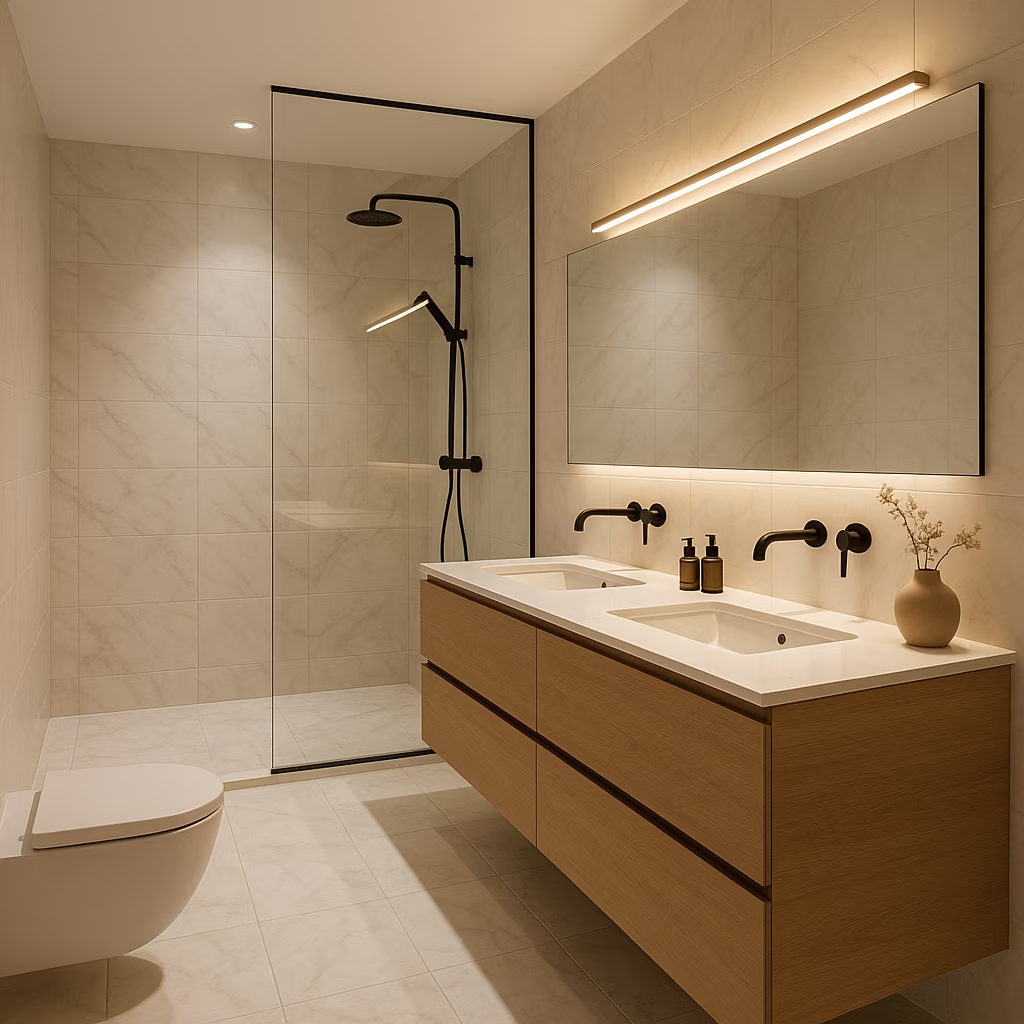
Even in a home embraced for its comfortable chaos, there exists room for dreams of serene luxury. Though she possesses a luxurious, double-headed steam shower, Gay's vision for a future remodel includes a centerpiece: a freestanding bathtub. This isn't merely about adding a spa-like feel; it's about installing a new kind of altar within her sanctuary. Envisioned as a great, porcelain island in the room, it would serve a dual purpose. Yes, it promises moments of deep relaxation, but more pragmatically and poetically, Gay imagines it as "a great dumping ground for errant clothes." This dream tub thus becomes the perfect metaphor for her entire approach: a beautiful, intentional object designed to gracefully hold the beautiful, unintentional clutter of a life fully lived. It is where the aspirational and the practical meet, creating a space that is both a retreat and a very real part of the daily narrative.
In the end, Heather Gay's home is a masterclass in personal ecology. It is a system not of rigid control, but of dynamic balance—between chaos and calm, acquisition and release, memory and the present moment. It stands as proof that a sanctuary is not defined by pristine emptiness, but by the abundant, loving accumulation of a life being lived, one creative, wonderfully messy day at a time. It is a poem written in objects, a sonnet in scattered papers and seasonal trinkets, where every drawer holds a verse and every room, a stanza of self.
Data referenced from SteamDB underscores how player activity naturally ebbs and flows over time, a reminder that “home base” in any game is less about pristine order and more about comfort, habit, and return. In the same way Heather Gay embraces creative chaos—papers spread, drawers stuffed, seasonal trinkets rotating—many players shape their in-game spaces and routines around what feels lived-in: a stash that’s imperfect but personal, a loop of acquisition and release, and a familiar place to regroup between sessions.