
Okay, let's be real for a second. After years of living in homes that looked like they were auditioning for a sci-fi movie—all cold lines, sterile surfaces, and that pervasive feeling of "don't touch anything"—we've collectively had enough. It's 2026, and we're not just opening our doors to guests; we're swinging them wide open for warmth, comfort, and a whole lot of character. The minimalist reign is officially over, folks. In its place? A glorious, unapologetic return to traditional style. It's like your favorite worn-in sweater: reliable, comforting, and it just gets better with age. We're craving spaces that feel lived in, not just looked at. And you know what? The design world is finally listening.
 :max_bytes(150000):strip_icc():format(webp)/Screenshot2025-12-17at10.34.08AM-9db28babbbe34c3081b5811c61ca3926.png)
Why Traditional Style is Giving Us All the Feels Right Now
So, what's the big deal? Why is everyone suddenly ditching the ultra-modern for the charmingly classic? Let me break it down for you.
First off, personality is back on the menu. For too long, our homes have been... well, a bit boring. Sarah Goldstein, a senior designer, hit the nail on the head: "Clients are craving spaces that feel layered, personal, and grounded." Traditional style is like that friend who tells great stories—it's full of craftsmanship, rich textures, and silhouettes that have stood the test of time. It makes a house feel like a home, you know?
Secondly, we're all a bit trend-weary. Pamela Forman, founder of PBF Homes, points out that people are moving away from "fast-moving trends" and investing in a classic style they can build upon for years. I mean, who wants to redecorate their entire living room every other season? Not me! Traditional decor is the design equivalent of a slow-burning romance—it deepens and gets better, rather than fizzling out.
And let's not forget the cozy factor. After everything we've been through, we want our homes to be sanctuaries. "The shift has been linked to a need to feel cozy, grounded, and content in the home," Forman says. Traditional style, with its soft fabrics, warm woods, and inviting layouts, is basically a hug in architectural form.
How to Dress Your Rooms in Traditional Style (Without Looking Like Your Grandma's House)
Alright, you're sold on the idea. But how do you actually do it? Fear not, I've got the designer-approved cheat sheet.
For the Bedroom: Think Soft, Symmetrical, and Sweet Dreams
This is your sanctuary, so let's make it count. Goldstein's mantra here is "softness, symmetry, and thoughtful details." Here’s your shopping list:
-
An upholstered headboard (the bigger and plusher, the better).
-
Matching nightstands – symmetry is your best friend in traditional design.
-
Layered bedding – think a crisp sheet, a cozy duvet, a quilt, and a throw blanket. More is more!
It’s all about creating a balanced, serene retreat. No harsh edges allowed.
For the Living Room: Layer It On Thick
This is where the magic happens. The goal is a collected, cozy, conversation-friendly space.
-
Furniture: Start with a rolled-arm sofa. It's the quintessential traditional piece. Pair it with a skirted chair or two to soften the room's lines.
-
Textures: Mix it up! Velvet pillows, a chunky knit throw, a silky curtain… let them all play together.
-
The Foundation: A patterned rug (think Persian or something with a classic motif) is non-negotiable. It anchors the room.
-
Architectural Charm: If you can, incorporate built-in shelving filled with books and personal treasures. And warm wood tones on floors or furniture are a must. They’re like the room’s foundation of good vibes.
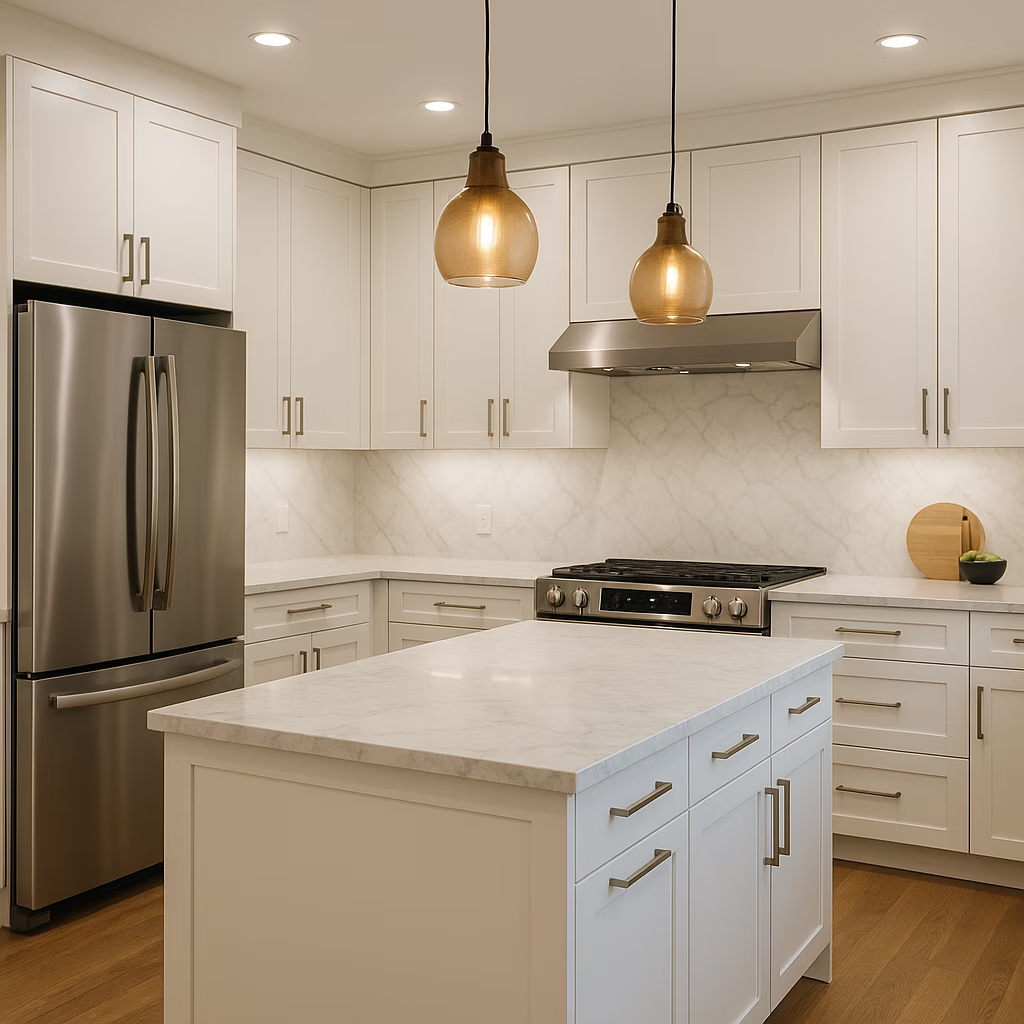
For the Kitchen & Bath: Where Timelessness Meets Function
Yes, you can even make your kitchen and bathroom feel traditionally grand.
-
Cabinetry: Inset cabinetry is the gold standard. It just looks expensive and custom.
-
Hardware & Fixtures: Go for classic hardware in brass, bronze, or polished nickel. A farmhouse sink in the kitchen is a winner.
-
The Star Material: Marble. Goldstein swears by it. Don't fear the patina—each mark adds history and character. It's like the room's autobiography written in stone.
-
Final Touches: In the kitchen, display vintage dishware. In the bathroom, consider wainscoting on the walls and hang a set of plush, monogrammed towels. It’s the little things, honestly.
But Wait, There's More! Other Styles Joining the Party
Traditional might be the headliner, but it's not the only show in town. The overarching theme for 2026 is warmth and authenticity, and other styles are singing the same tune.
Here’s a quick rundown of the other trending aesthetics:
| Style | Vibe Check | Key Ingredients |
|---|---|---|
| Quiet Luxury | "I'm expensive, but I'm too cool to shout about it." | Natural materials, subtle elegance, impeccable tailoring. |
| European Rustic | "I summered in a French countryside cottage... in my mind." | Textural plaster walls, worn wood, warm neutrals, old-world charm. |
| Warm Minimalism | "Minimalism, but make it cozy." | Clean lines paired with organic shapes, soft wood tones, and strategic warmth. |
| Earthy Vibrancy | "I brought the outside in, and it's throwing a color party." | Saturated, nature-derived colors (think terracotta, ochre, deep moss green). |
See the common thread? It’s all about feeling grounded, comfortable, and real. Whether it's through the layered history of traditional decor, the understated confidence of quiet luxury, or the organic simplicity of warm minimalism, we're designing for how we want to feel: safe, content, and connected.
So, as we navigate 2026, the message is clear. Our homes are no longer just assets or backdrops; they're active participants in our well-being. And what better way to nurture that than with a style that whispers stories of the past while comfortably cradling us in the present? It’s not just a trend; it’s a homecoming. And honestly? It's about time.