
 :max_bytes(150000):strip_icc():format(webp)/SPR-wainscoting-ideas-7642788-hero-eeddd82c80bd4c5fba1fc41fd5b7b538.jpg)
Once relegated to the formality of dining rooms and historic restorations, wainscoting has erupted into a full-blown design movement in 2026. Interior designers are stripping away the strict rules that once governed those wood-paneled lower walls, trading predictable white beadboard for an adventurous palette of saturated colors, unexpected geometries, and clever material swaps. The result is a collective redefinition of architectural charm—one that feels equally at home in a hyper-modern loft, a cozy farmhouse powder room, or a child’s whimsical bedroom.
The Color Revolution: Saying Goodbye to Sterile White
For years, white wainscoting was the safe default. But 2026’s interiors are embracing color with confidence. Christina Kim Interior Design electrified an elegant modern space by painting crown moldings, ceiling, and wainscoting in a raspberry pink sherbet, then pairing it with leafy tropical wallpaper. The approach turns the lower wall into a deliberate design statement rather than a subdued backdrop. Similarly, Brexton Cole Interiors revived a traditional entryway with robin’s egg blue wainscoting against a black-and-white illustrated landscape mural—proof that pastels can feel opulent when layered with gilt mirrors and furniture.
Earthy tones are making an equally strong showing. A sage green wainscoting in a bedroom by Ajai Guyot for Emily Henderson Design adds organic calm against a black-and-white illustrated wallpaper, while a rich olive green wraps built-in bookshelves and a window seat in a kids’ room by Brexton Cole, topped with airy patterned paper that keeps the space from feeling heavy.
Geometry Gets Personal
The classic linear panel is getting a bold geometric rethink. The House That Lars Built transformed a mundane entryway with DIY wainscoting that swapped rectangles for a playful composition of diamonds and circles, all painted light blue and crowned with colorful floral wallpaper. This approach turns a traditional feature into a contemporary personal signature, proving that wainscoting can be as much about self-expression as it is about craftsmanship.
In more minimalist spaces, the geometry is subtle but impactful. Leanne Ford Interiors abandoned ornate wood detailing entirely, instead installing a simple plank border that exactly matches the width of the floorboards—a streamlined piece of millwork that gives the illusion of continuous surface.
The Power of Contrast: Drama Through Darkness and Light
High-contrast pairings are dominating 2026’s wainscoting conversations. Mary Patton Design set a crisp white wainscoting against forest green grasscloth wallpaper in a midcentury modern dining room, creating a sharp background that allows art and sculptural lighting to pop. Dark taupe drapes hover above extra-tall white wainscoting that runs two-thirds up the wall in a Marie Flanigan Interiors dining room, introducing a neo-traditional tension. Meanwhile, Forbes + Masters used stark white panels to ground a room exploding with matching hand-painted wallpaper and curtains, preventing visual chaos.
Black-and-white combinations remain a perennial favorite. Emily Henderson Design paired white board-and-batten wainscoting with graphic black-and-white patterned wallpaper, then warmed the space with rich wood furniture and gold accents—a look that feels both fresh and timeless.
Material Mashups and Trompe L’oeil
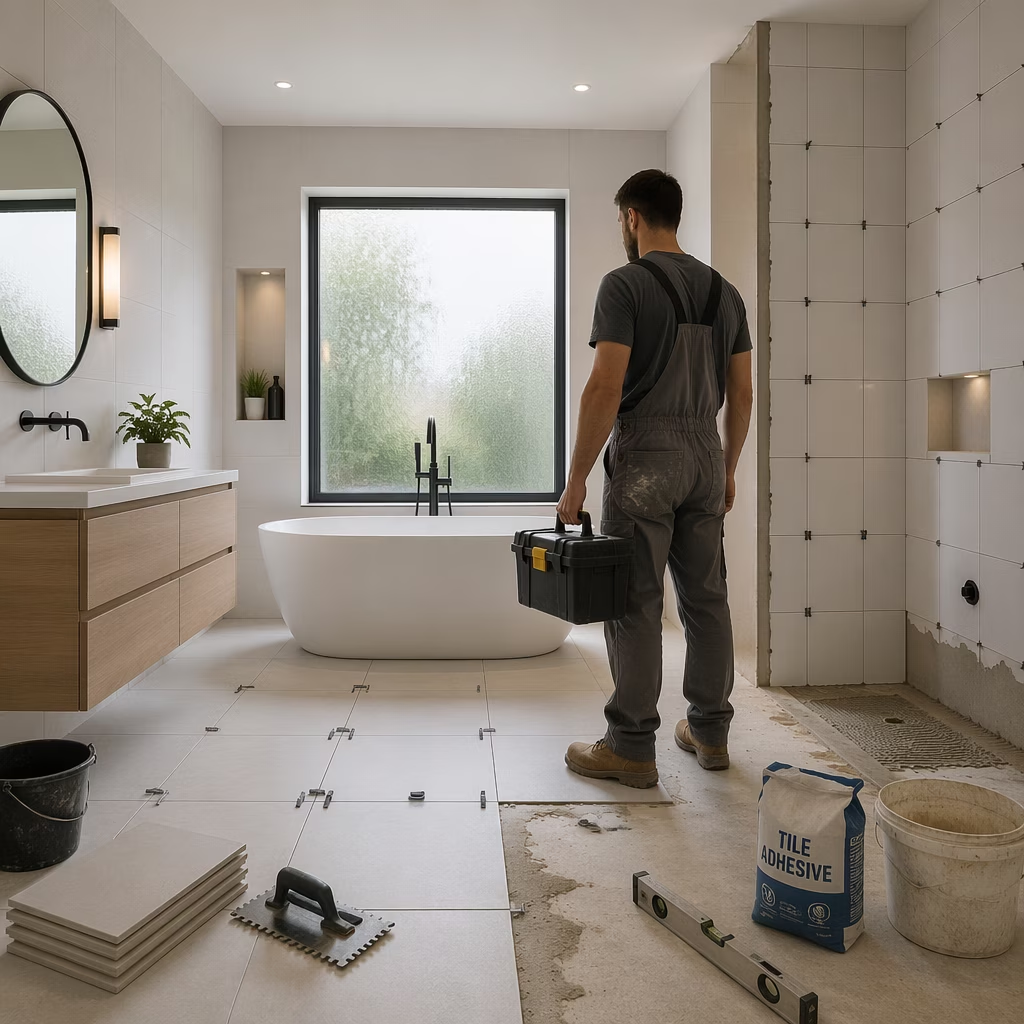
Wood is no longer the only game in town. Bathrooms, in particular, are seeing a surge in tile-based wainscoting. Ashley Montgomery Design achieved the effect by tiling the lower wall and topping it with wallpaper, creating a durable, moisture-resistant version of the classic detail. For an even more budget-friendly twist, some designers are using a contrasting paint line to mimic the visual weight of wainscoting without a single piece of molding—a trompe l’oeil technique that is ideal for renters or quick refreshes.
Shiplap continues its reign in modern farmhouse settings. Becca Interiors ran vertical shiplap around a compact powder room, painting it a soft beige that doubles as a subtle backsplash, while Kate Marker Interiors paired white shiplap with blue grasscloth wallpaper and wavy patterned curtains for a breezy coastal dining room.
New Heights and Unexpected Locations
The old rule that wainscoting should occupy only the lower third of the wall has been thoroughly debunked. Super-tall installations are everywhere in 2026, running two-thirds or even three-fourths up the wall to create a dramatic, gallery-like enclosure. K+Co. Living installed particularly tall rectangular panels in a formal dining room, lending the space a contemporary monumentality. On the opposite end, a thin chair rail painted the same dark color as the window trim by Michael Keck for Emily Henderson Design visually divides a room without heavy woodwork—an airy, modern interpretation.
Wainscoting has also migrated out of its traditional territory. Laundry rooms, hallways, and mudrooms are now beneficiaries of this architectural device. Jessica Nelson Design worked the angles of a small laundry room by integrating wainscoting around a built-in bench niche, painting it light gray to amplify coziness. In a hallway, Ashley Montgomery Design bathed both wainscoting and walls in warm cocoa, then painted door frames in soft vintage blue for a rhythm of color.
Cohesion and Contrast Across Open Plans
In open-concept homes, wainscoting is being deployed strategically to either unify or zone spaces. Brexton Cole Interiors used identical white wainscoting in both a foyer and an adjacent dining room but changed the wall treatment above—cream paint in one, botanical wallpaper in the other—to define each zone while maintaining flow. Becca Interiors took the opposite approach, installing wainscoting in two completely different styles and colors between a foyer and a mudroom to create distinct, purposeful zones.
The Takeaway for Homeowners
Choosing wainscoting in 2026 is less about following a prescription and more about curating a feeling. The color should respond to the whole room—picking up a note from the wallpaper pattern or contrasting with the dominant wall shade to energize the eye. Height determines drama: standard one-third scales bring classic elegance, while towering panels skew contemporary. And material selection can push the look from rustic shiplap to sleek tile. Above all, designers agree that wainscoting is no longer merely a background feature. It has become a front-line tool for layering texture, color, and personality into any room of the house.